GHK-Cu Peptide Benefits: Understanding the Research Behind Copper Peptide
Most people first hear about GHK-Cu peptide benefits from a friend who won’t stop talking about their skin. Or maybe it happens during a late-night scroll through a research forum. Scientists there trade notes about collagen, tissue repair, and a strange little tripeptide. It keeps showing up in decades-old journals.
Either way, the questions tend to repeat. What is this thing? Does it actually do anything? Why does a molecule discovered in the 1970s suddenly feel like the center of modern peptide science?
This guide walks through the research behind GHK-Cu, also known as copper tripeptide-1 — not the hype. We’ll cover what the compound is and how researchers believe it works. We’ll also look at what the scientific literature says about its role in skin, connective tissue, and cellular studies.
What Is GHK-Cu Peptide?
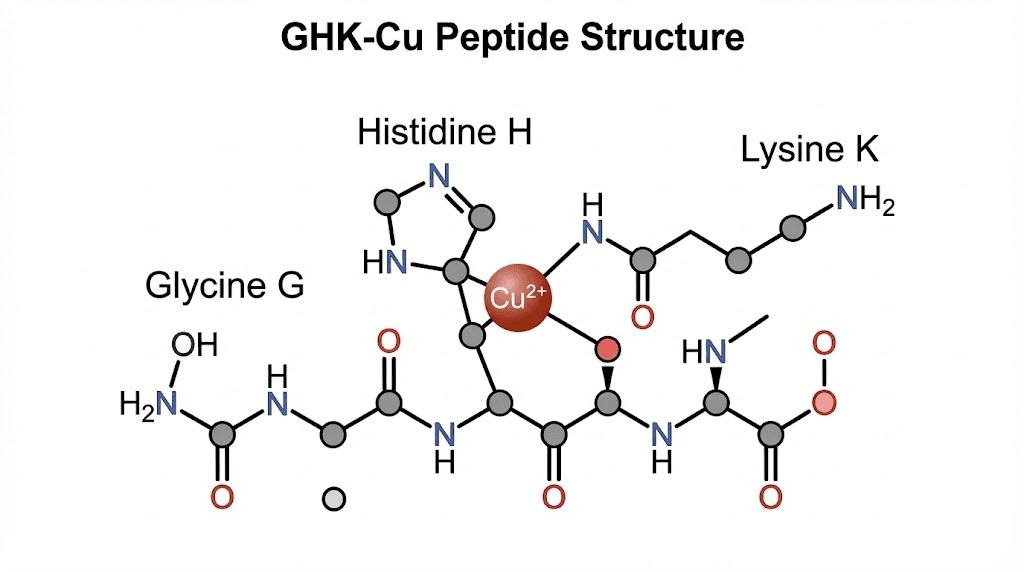
GHK-Cu stands for glycyl-L-histidyl-L-lysine copper complex — a naturally occurring tripeptide bound to a copper ion. Researcher Loren Pickart first isolated it from human plasma in 1973. He noticed something curious. When plasma from younger donors met liver cell cultures from older donors, the older cells started behaving more like younger ones. A small copper-binding peptide turned out to be the active component responsible for that shift.
That discovery kicked off decades of research into the GHK-Cu copper peptide Benefits. It remains one of the most studied signaling peptides in regenerative biology today.
Here’s the part that makes it interesting to researchers: GHK naturally exists in the human body, but its levels decline steadily with age. Young adults show measurably higher plasma concentrations than older adults do. That pattern has fueled a lot of scientific curiosity about the peptide’s connection to tissue aging and repair.
The Basic Biology, Simplified
Think of copper tripeptide-1 as a kind of biological messenger. When your skin or connective tissue experiences injury, GHK-Cu levels in the surrounding plasma rise sharply, almost like an alarm going off. That signal triggers a chain reaction. Fibroblasts — the cells responsible for producing collagen — rush to the site, and repair processes ramp up.
Researchers describe this as mimicking the body’s own damage-response system. It’s not introducing something foreign. It’s amplifying a signal your body already produces naturally.
How Does GHK-Cu Peptide Work? The Proposed Mechanisms
So how does GHK-Cu peptide work on a cellular level? This is where the research gets genuinely fascinating. It’s also where scientists have spent the most time digging.
1. Collagen and Extracellular Matrix Support
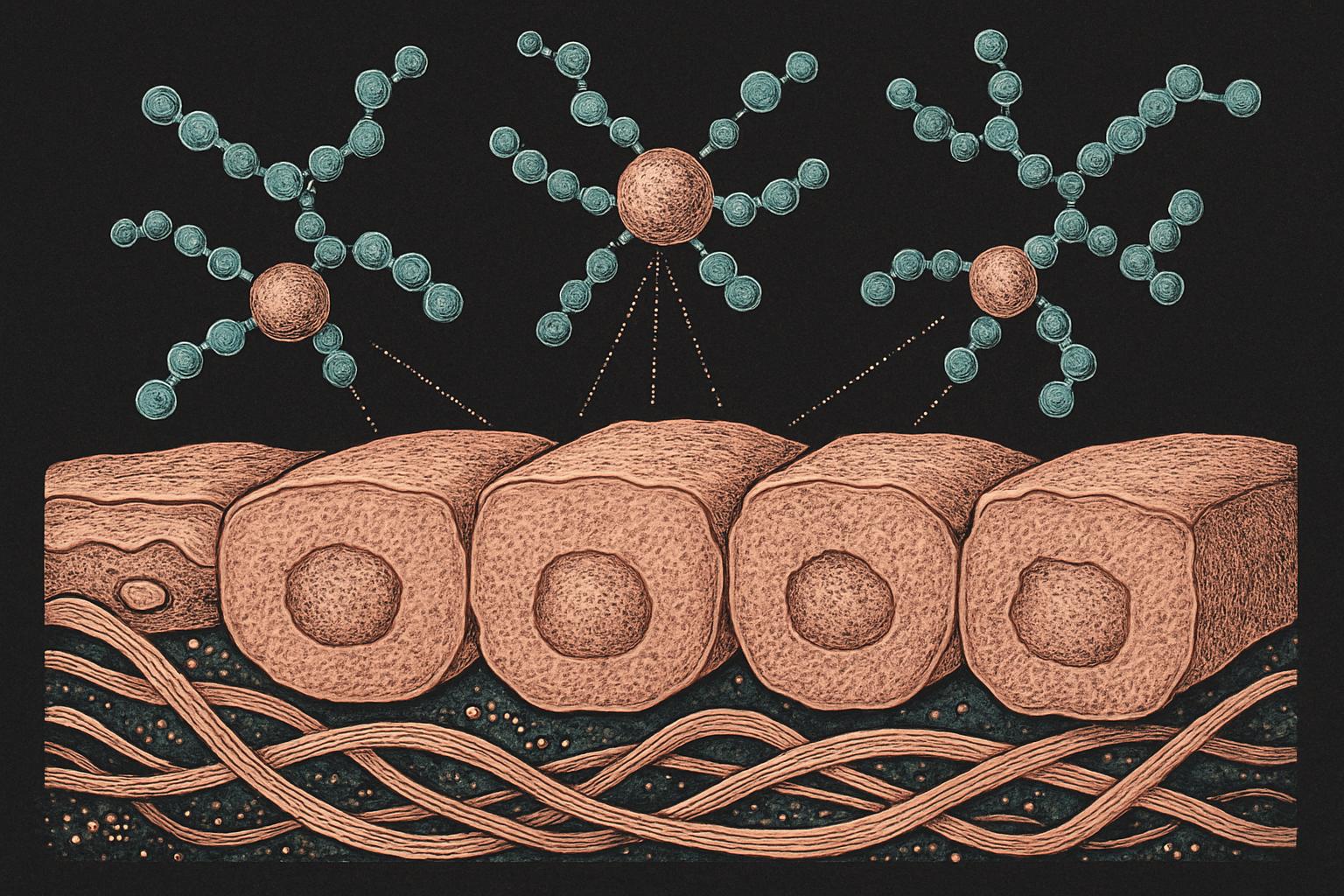
The extracellular matrix (ECM) is the scaffolding that holds your skin and connective tissue together. Collagen, elastin, and glycosaminoglycans all live here. GHK-Cu peptide and collagen research consistently points to the peptide’s ability to stimulate fibroblasts into producing more of these structural proteins.
Studies show GHK-Cu supports extracellular matrix remodeling. It also promotes the synthesis of collagen, elastin, proteoglycans, and glycosaminoglycans. Laboratory work has linked it to anti-inflammatory and antioxidant activity too. That’s a lot of biological ground covered by one small molecule.
One notable human trial compared topical copper peptide application to vitamin C and retinoic acid. Researchers observed collagen increases in a majority of volunteers using GHK-Cu. Those results outperformed both comparison ingredients.
2. GHK-Cu Peptide and Skin Regeneration Research
If you’ve spent any time researching GHK-Cu peptide benefits for skin health, you’ve probably noticed how often “regeneration” comes up. That’s not marketing language. It reflects a genuine, recurring theme across the scientific literature.
Early studies found that GHK stimulates the synthesis of collagen, elastin, and glycosaminoglycans in skin. The same research linked it to faster wound healing and restored function in damaged fibroblasts. It also pointed to reduced scarring.
There’s also cellular-level evidence worth noting. In one laboratory study, fibroblasts damaged by radiation exposure showed impaired growth and collagen production. Once treated with GHK-Cu, though, those irradiated cells began behaving more like healthy, non-irradiated cells. They also showed increased secretion of key growth factors involved in tissue repair.
That kind of “rescue effect” in damaged cells partly explains the interest in GHK-Cu peptide cellular research. It suggests a mechanism that goes beyond surface-level skin support and into how cells recover from stress.
3. GHK-Cu Peptide Wound Healing Research
Wound healing is arguably where the research trail runs longest. Multiple animal-model studies found that GHK-Cu accelerates wound closure and enhances wound contraction. It also improves skin-graft integration and increases the formation of new blood vessels, known as angiogenesis.
At low, non-toxic concentrations, these studies showed the peptide stimulating collagen, glycosaminoglycans, and proteoglycans like decorin. It also helped regulate the enzymes responsible for remodeling the extracellular matrix during healing.
Ongoing clinical research continues to explore this angle directly. One current proof-of-concept study is examining whether a topical GHK-Cu gel reduces the time acute wounds take to fully re-epithelialize compared to a vehicle control. It’s also tracking wound area reduction, scar quality, and safety over time.
4. Anti-Aging and Cellular Signaling
The GHK-Cu peptide anti-aging research angle gets genuinely wild from a data-science perspective. Bioinformatics analyses by Pickart and colleagues suggest GHK-Cu may influence the activity of thousands of genes. A significant portion of those relate to extracellular matrix maintenance, collagen production, and tissue repair signaling.
That’s not a claim about “reversing aging” in a magical sense. It’s a description of how broadly this one peptide appears to interact with cellular signaling pathways involved in tissue maintenance. That’s a big reason researchers keep circling back to it.
GHK-Cu vs Copper Peptides: What’s the Difference?
If you’ve been searching GHK-Cu vs copper peptides, here’s the short answer: GHK-Cu is a copper peptide — specifically, the most extensively studied one. “Copper peptide” is really an umbrella term for any peptide complexed with a copper ion. Several exist in skincare and research formulations.
What sets GHK-Cu apart is the sheer depth of research behind it. Some other copper-containing compounds, like copper chloride or copper acetate, can irritate skin. Studies haven’t found GHK-Cu to be cytotoxic or irritating when applied topically. That makes it an appealing option for researchers studying copper delivery into skin tissue.
That safety profile in topical research contexts is one reason GHK-Cu tends to dominate conversations about copper tripeptide-1 benefits compared to its lesser-studied relatives.
What Are the Benefits of GHK-Cu Peptide? A Closer Look at the Evidence
Let’s break down what are the benefits of GHK-Cu peptide according to the current body of research. We’ll organize by the areas scientists have studied most closely.
Skin Firmness and Wrinkle-Related Research
A 12-week trial linked GHK-Cu creams to measurable improvements in skin firmness, laxity, density, and wrinkle depth around the eyes and face. Separate studies evaluating GHK-Cu applied to the face also noted reductions in fine lines and wrinkle depth. This pattern explains why does GHK-Cu reduce wrinkles is such a frequently searched question. The topical research literature does show this effect, though results vary by formulation and study design.
Collagen Synthesis at the Cellular Level
GHK-Cu increases collagen synthesis in fibroblast cultures by stimulating TGF-β signaling pathways. It also upregulates collagen I and III gene expression. It raises integrin expression and the p63 transcription factor too, both of which support the proliferative and synthetic activity of dermal fibroblasts.
Hair-Related Research
Does GHK-Cu increase hair? This is an area of emerging, but still limited, interest. Researchers have studied GHK-Cu for a variety of applications including alopecia. Relatively few studies focus specifically on its effects on hair, though, so effective research concentrations for this use aren’t well established yet. It’s promising, but far from settled science.
Skin Penetration and Delivery
One practical research question asks how well GHK-Cu actually penetrates skin. Comparative studies assessing the permeability of GHK and its derivatives found that GHK-Cu achieved notably higher permeation rates than unmodified GHK. That suggests binding the peptide to copper may itself enhance its ability to cross the skin’s outer barrier.
Honest Limitations: What the Research Doesn’t Yet Confirm
Good science means acknowledging the edges of what’s known. GHK-Cu peptide scientific evidence has real limitations worth understanding.
- Stability challenges. Tripeptides like GHK-Cu have a short half-life in plasma — generally less than 30 minutes. The metal-peptide complex itself can also be unstable, since copper reacts easily and is sensitive to environmental factors.
- Not every study agrees. One trial using a lower concentration of topical GHK-Cu for venous stasis ulcers found no benefit over placebo. Results clearly vary depending on concentration, formulation, and the condition being studied.
- Dose-dependent effects. Research comparing GHK to GHK-Cu in wound models found that only the copper-bound form produced a statistically significant increase in collagen accumulation. Higher concentrations were also associated with skin irritation in some studies. More isn’t automatically better — a pattern that shows up again and again in peptide research.
- Clearance after delivery. Some research has also noted poor skin absorption in certain contexts due to the peptide’s hydrophilicity, along with rapid clearance following dermal delivery.
These findings aren’t reasons to dismiss the research. They’re reminders that GHK-Cu, like most bioactive peptides, remains an active area of scientific investigation rather than a settled, one-size-fits-all solution.
Frequently Asked Questions About GHK-Cu Peptide
What does GHK-Cu peptide do for your body?
Current research suggests GHK-Cu acts as a signaling molecule involved in the body’s natural tissue-repair response. It appears to support collagen and elastin synthesis and modulate inflammation. It also influences how fibroblasts and other cells behave after injury or stress.
How to use GHK-Cu peptide?
Use varies enormously depending on the research context. Topical formulations, laboratory cell-culture studies, and other delivery methods all appear in the scientific literature, each with different concentrations and protocols. Because GHK-Cu is a bioactive compound with real physiological effects, anyone considering using it should speak with a qualified healthcare provider or research supervisor first. Don’t rely on general online guidance.
How much GHK-Cu should I inject daily? / Where to inject GHK-Cu? / How long should I take GHK-Cu peptide for? / Can I use GHK-Cu long term?
These questions matter, but a blog article can’t responsibly answer them. Dosing, administration method, and duration depend on individual health factors, the specific research or clinical protocol in use, and product formulation. Those variables require direct evaluation by a licensed healthcare professional or a qualified research oversight body. Anyone exploring GHK-Cu in a personal or clinical context should have that conversation with a professional, not a search result.
What are the side effects of GHK-Cu?
The literature generally describes a favorable safety profile for GHK-Cu in topical research settings. Studies haven’t typically found it cytotoxic or irritating when applied to skin. That said, some research has observed skin irritation at higher concentrations. Copper compounds in general also carry the potential for reactions depending on dose, formulation, and individual sensitivity. Anyone with copper sensitivity, existing health conditions, or questions about a specific product should consult a healthcare provider before use.
Can GHK-Cu damage kidneys?
This is a fair question, since the body has to regulate copper carefully as a trace mineral. Systemic copper handling involves the liver and kidneys. Excessive copper exposure from any source can carry health risks. This kind of question depends heavily on individual health history, particularly kidney or liver function. It deserves a direct conversation with a physician rather than a generic answer.
Who is not allowed to take GHK-Cu peptide?
GHK-Cu hasn’t been established as universally appropriate for every individual. That includes people with copper metabolism disorders like Wilson’s disease, pregnant or breastfeeding individuals, and those with existing health conditions. Decisions about who should or shouldn’t use it should always happen in consultation with a healthcare provider, not through self-directed research.
What should you not mix peptides with?
Peptide interactions can get complex fast. Combining multiple bioactive compounds without professional guidance raises the risk of unpredictable effects. Anyone researching peptide stacking or combination protocols should work with a knowledgeable professional who can evaluate the full picture, not just how two compounds behave in isolation.
What to avoid when using copper peptides?
Common-sense research precautions include steering clear of unnecessarily high concentrations, given the irritation risk noted above. It’s also worth avoiding unverified or low-quality sourcing. Avoid combinations with other ingredients or compounds without first understanding potential interactions.
What happens when you stop taking GHK-Cu?
GHK-Cu’s effects generally appear to support the body’s existing repair signaling rather than replace a biological function. Because of its short half-life, most research suggests any observed effects would taper off as the compound clears the system. Individual variation matters here too, so specific expectations deserve a conversation with a professional familiar with your situation.
How quickly do copper peptides work?
Timelines vary widely across the studies reviewed here. Cellular and animal-model research shows measurable changes within days in some cases. Topical human trials tracking wrinkle depth and skin firmness typically run over multiple weeks — commonly 8 to 12 — before showing meaningful results.
The Bigger Picture: Why Researchers Keep Coming Back to GHK-Cu
It’s worth asking why a peptide discovered over fifty years ago still generates active research today. Part of the answer lies in an unusually interesting intersection. The human body naturally produces GHK-Cu, and it appears to interact with an enormous number of genes and signaling pathways. It shows measurable effects across multiple, independently studied domains — skin, wound healing, connective tissue, and cellular stress response.
That combination is rare. Most research compounds stay narrow in scope, doing one thing in one context. GHK-Cu peptide uses, by contrast, span an unusually wide range of the scientific literature. You’ll find it in dermatology journals, regenerative medicine research, and cell biology papers exploring gene expression.
None of that makes it a miracle molecule. The researchers who study it closely tend to be the first to point out its limitations — short half-life, formulation instability, and the need for more large-scale human trials in several areas. Still, it explains why GHK-Cu copper peptide research shows no signs of slowing down anytime soon.
Final Thoughts
The research behind GHK-Cu peptide benefits is genuinely substantial. Decades of laboratory studies, animal models, and a growing number of human trials all point toward a compound with real, measurable effects. It shows promise for collagen synthesis, wound healing, and cellular repair signaling. Moreover, the same time, the story isn’t fully settled. Formulation stability, optimal concentrations, and long-term outcomes across different applications remain active areas of scientific inquiry.
Whether you’re a skincare enthusiast, a laboratory professional, or simply someone curious about peptide science, the most valuable move is the same. Keep reading primary research. Stay skeptical of oversized claims. Loop in a qualified professional before making any decisions about personal use.</p>
Science rarely hands us a finished answer. With GHK-Cu, what we have instead is a genuinely compelling, still-unfolding research story. That’s exactly what makes it worth paying attention to.
Sources
- Pickart, L. et al. “Skin Regenerative and Anti-Cancer Actions of Copper Peptides.” Cosmetics (MDPI), 2018.
- “Exploring the Role of Tripeptides in Wound Healing and Skin Regeneration: A Comprehensive Review.” International Journal of Medical Sciences, 2025.
- “Topical GHK-Cu Gel for Acute Skin Wound Healing.” ClinicalTrials.gov study listing, U.S. National Library of Medicine.
- “Copper Tripeptide GHK-Cu and Regenerative Aesthetics.” PRIME Journal.
- “Copper Peptide (GHK-Cu): Clinical Uses, Stability & Compounding Tips.” Fagron Academy.
- “Food-Derived Tripeptide–Copper Self-Healing Hydrogel for Infected Wound Healing.” Biomaterials Research.
This list covers the primary studies and clinical sources referenced above. Some figures (e.g., the Abdulghani et al. 1999 trial comparing GHK-Cu to vitamin C and retinoic acid) are drawn from secondary summaries of older published research; where possible, verify against the original journal article before publishing if precise citation is required for compliance purposes.</em>